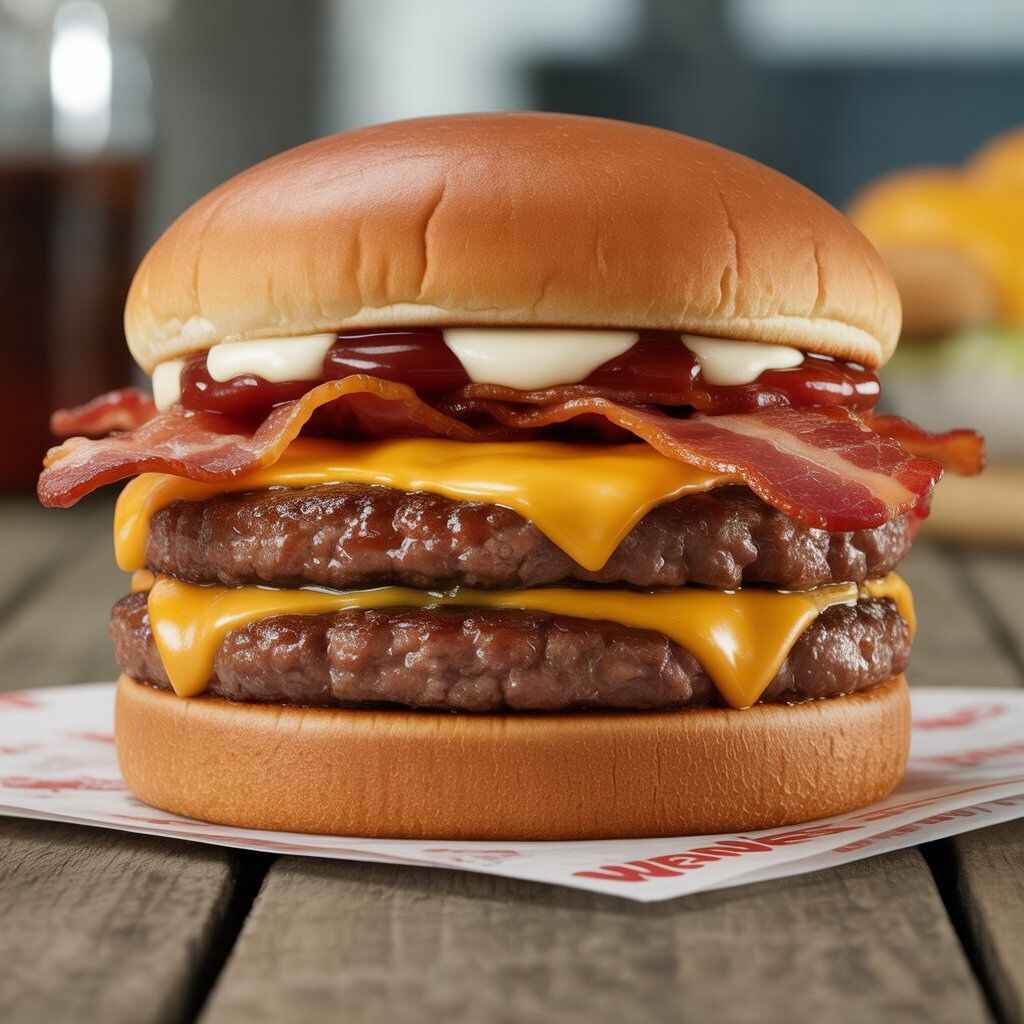
Baconator packs 57g protein, fits high-protein diets but is high in calories, fat, sodium. Go keto by skipping the bun.
Baconater protein how much and is it a good source:
When people search for baconater protein, they’re usually curious about more than just a number.
Protein is one of the main reasons someone orders a hearty fast-food burger, and the Wendy’s Baconator has earned a reputation for delivering plenty of it.
With two beef patties, multiple slices of bacon, and cheese, it’s easy to assume it packs a serious protein punch.
But how much protein does it actually contain, and how does it compare to other fast-food options? In this guide, we’ll break down the baconater protein content, full nutrition facts, and how it fits into different diets.
What Is a Baconator?
The Baconator is one of Wendy’s most recognizable burgers, built to stand out on the menu.
It’s stacked with two quarter-pound beef patties, six strips of crisp bacon, two slices of American cheese, ketchup, and mayonnaise on a toasted bun. Unlike lighter fast-food options, this burger was designed to emphasize indulgence and protein content.
Because of its double patty structure and heavy bacon layer, the Baconator delivers far more protein than typical burgers, making it a frequent search for baconater protein details.

How Much Protein Is in a Baconator?
A standard Wendy’s Baconator delivers about 57 grams of protein in one serving, which is significantly higher than most fast-food burgers.
For perspective, a Big Mac offers closer to 25 grams, and a Whopper about 28 grams. The baconater protein amount comes mainly from its two beef patties and generous bacon strips.
While the protein count is impressive, the overall nutrition also includes high calories and fat, which means this burger is better enjoyed in moderation, especially if you’re tracking daily macros.
Baconator Nutrition Facts: Calories, Fat & Carbs
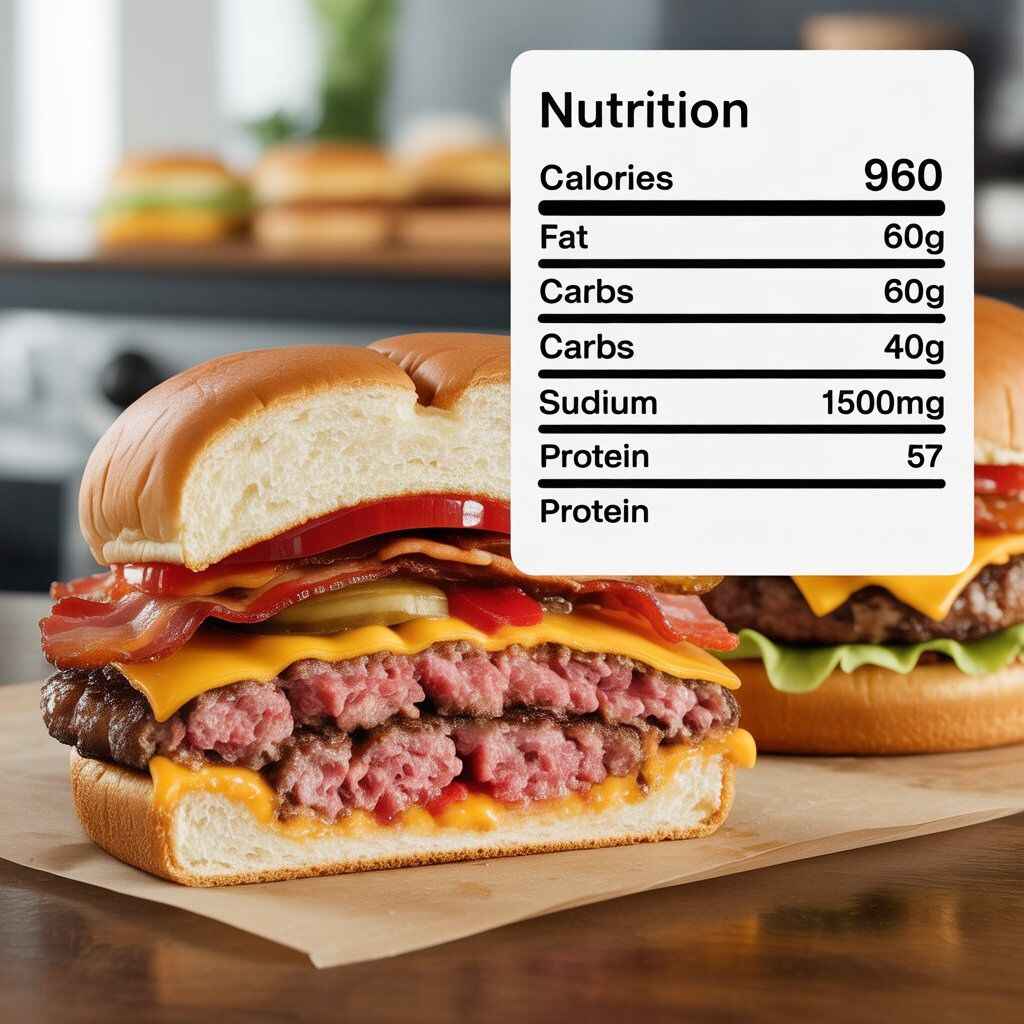
Beyond its high baconater protein content, the Baconator packs a big calorie load—around 960 per sandwich.
Fat makes up nearly half of that, with over 60 grams, much of it saturated. Carbohydrates sit around 40 grams, mostly from the bun and condiments, while sodium levels soar past 1,500 milligrams.
This mix makes the Baconator a calorie-dense option that delivers plenty of flavor but also requires mindful eating. Knowing the full macronutrient breakdown helps balance it within your daily nutrition plan.
Table
Baconator Nutrition Facts (per sandwich)
| Nutrient | Amount | Notes |
|---|---|---|
| Calories | ~960 | High energy load, almost half of daily needs for many adults |
| Protein | ~57 g | Main highlight; one of the highest in fast food burgers |
| Total Fat | ~62 g | Includes ~24 g saturated fat |
| Carbohydrates | ~40 g | Mostly from bun and condiments |
| Sodium | ~1,540 mg | Over 65% of the recommended daily limit |
| Cholesterol | ~205 mg | Significant portion of daily intake |
Baconator Variations & Protein Changes
Wendy’s has introduced several Baconator spin-offs, each with a different protein content.
The Son of Baconator comes in lighter, with about 40 grams of protein, while the Triple Baconator pushes the total well above 70 grams.
Seasonal twists like the Pretzel Baconator keep the numbers close to the original, but toppings may alter calories and fat.
For low-carb eaters, a Baconator without the bun keeps the baconater protein high while cutting carbs, making it a more keto-friendly choice.
Is the Baconator a Good Protein Source?
With nearly 57 grams of protein, the Baconator clearly delivers a lot of muscle-building fuel. However, its protein-to-calorie ratio isn’t as strong as leaner choices like grilled chicken or turkey burgers.
Only about a quarter of its calories come from protein, with the rest from fat and carbs.
That makes the Baconator more of an indulgence than a daily go-to for high-protein diets. Still, if someone craves fast food and prioritizes baconater protein, it’s among the highest-protein burgers available.
Health Considerations & Smart Choices
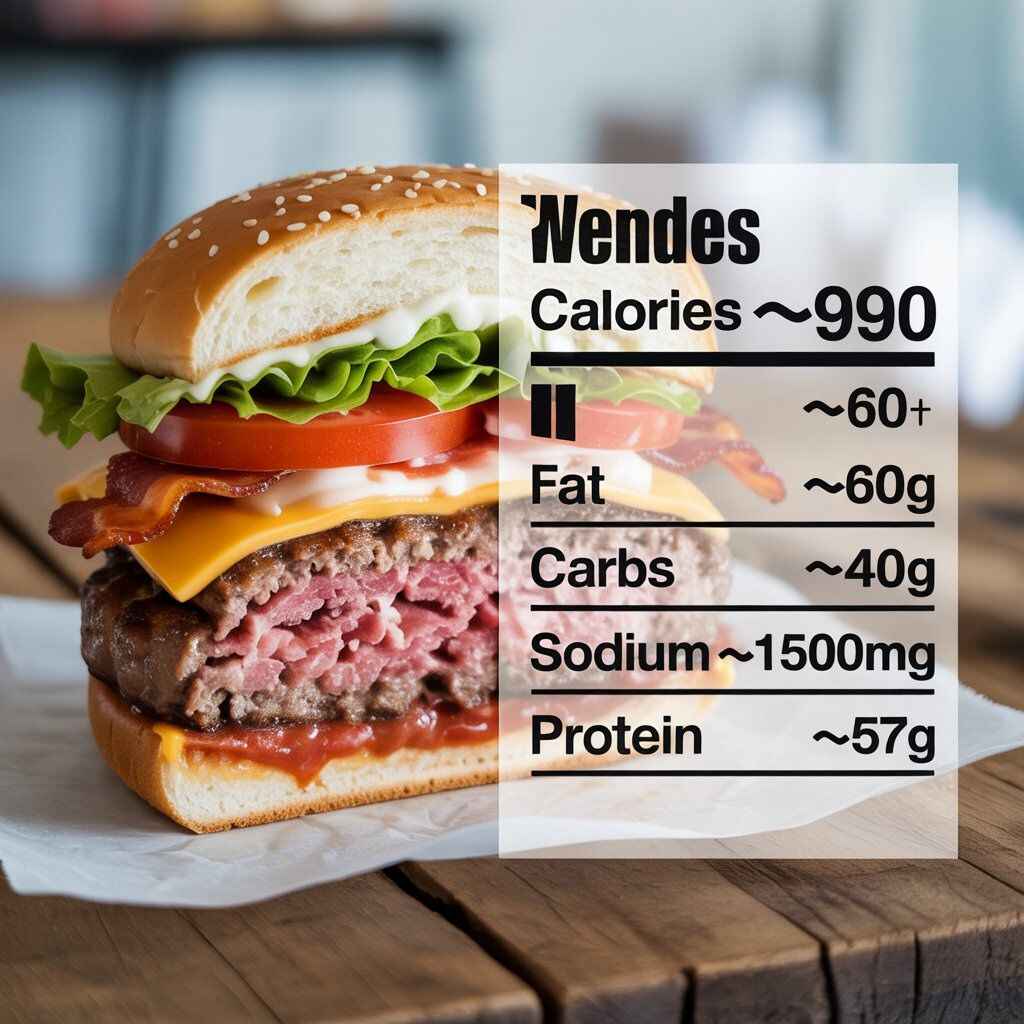
While the baconater protein count is impressive, the burger also delivers high sodium, cholesterol, and saturated fat. Eating it regularly may push you past daily recommended limits, especially for heart health. For those tracking macros, small adjustments can make it more manageable—skip the bun to lower carbs, or pair it with a side salad instead of fries. The Baconator works best as an occasional treat, not a staple, but mindful choices can help balance enjoyment with nutritional responsibility.
Baconator vs Other Fast-Food Burgers
When it comes to fast food protein sources, the Baconator stands out. Its 57 grams of protein easily surpass the Big Mac at about 25 grams and the Whopper at roughly 28 grams.
Even McDonald’s Double Quarter Pounder, with around 48 grams, falls short. The trade-off is calories—nearly 960 in the Baconator versus 550 in a Big Mac.
For anyone focused on baconater protein, it’s one of the strongest options, but it carries a heavier nutritional load than most rivals.
Using Baconator Protein Data in Meal Planning
Knowing the exact baconater protein content can help you fit it into your daily nutrition goals. At 57 grams of protein, it may cover nearly half of an average adult’s recommended intake.
If you’re tracking macros, balance it by choosing lighter, lower-fat meals for breakfast or dinner. For athletes or those on high-protein diets, it can serve as a convenient fast-food option.
Just remember to factor in the extra calories, sodium, and fat so the rest of your day stays on track.
FAQs
Q1: How much protein is in a Baconator?
A: A standard Baconator has about 57 grams of protein.
Q2: Is the Baconator good for a high-protein diet?
A: It’s protein-rich but high in calories, fat, and sodium, so moderation is key.
Q3: Can I order it keto-friendly?
A: Yes, ask for a Baconator without the bun to cut carbs while keeping protein high.

Shahroz Malik is a seasoned health and nutrition writer with over four decades of practical experience in wellness and fitness.At 62, he brings unmatched expertise in protein-focused diets, muscle health, and sustainable nutrition.Through his website Protein Power, Shahroz shares evidence-based articles on high-protein meal plans, weight management, and performance nutrition.His mission is to help people of all ages discover the benefits of protein for strength, energy, and long-term health.